

Understanding the quantifiable improvements helps justify Keep-Alive configuration choices. Whereas WebSockets take a unique approach (an upgraded persistent TCP connection with a different protocol), Keep-Alive remains to be related for long-polling patterns. With multiplexing, a sluggish request for a big picture now not blocks smaller, faster requests for CSS or scripts. You can learn extra about the protocol’s fundamentals in our article on what is HTTP. Tuning these settings is a balancing act between performance and resource administration.
If getInputStream() successfully returns, read the complete response body. Do not abandon a connection by ignoring the response physique. Thus, even when the application would not call getErrorStream(), learn the response physique, after which call close(), the underlying socket connection may still be kept-alive and reused. What the application needs to do is call HttpURLConnection.getErrorStream() after catching the IOException , learn the response physique, then shut the stream. In this case, the underlying TCP connection will not be Kept-Alive as a end result of the response physique continues to be there to be consumed, so the socket connection is not cleared, due to this fact not available for reuse. Moreover, current implementation won’t try block-reading when cleansing up the connection, meaning if the whole response body just isn’t available, the connection is not going to be reused.
- NGINX’s HTTP‑caching characteristic can cache responses from the upstream servers, following standard cache semantics to regulate what is cached and for how long.
- It allows a stream of information pictures, scripts, and stylesheets to journey over the same established TCP connection.
- Hostinger users can also use the web page speed check feature on Hostinger dashboard to examine if Keep-Alive is working properly.
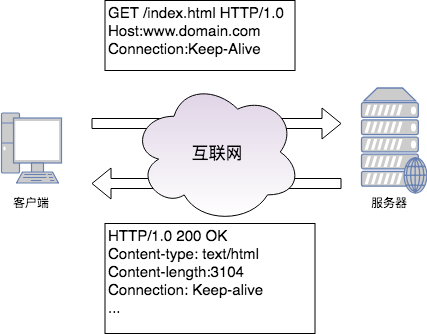
- HTTP Keep-Alive, also called a persistent connection, is a characteristic that allows a single TCP connection to remain open for a quantity of HTTP requests and responses.
The course of was gradual because each request had to begin with a full TCP handshake, a three-step course of (SYN, SYN-ACK, ACK) to establish a connection. Moreover, command-line instruments like cURL may be employed to test HTTP headers and ensure the presence of Keep-Alive in responses from the server. Correct configuration can result in significant efficiency improvements for web applications. The Keep-Alive mechanism operates by sending a header in the HTTP request that signifies the client’s desire for a persistent connection. Therefore, it is strongly recommended to make use of the HTTP/2 and HTTP/3 protocols instead of HTTP/1.1 if possible.
How To Allow This Setting?
It permits multiple HTTP requests and responses to be sent over a single TCP connection, decreasing latency and bettering efficiency. The Keep-Alive header allows the consumer and server to negotiate parameters for persistent connections. TCP keepalive is an OS-level mechanism sending probe packets to detect useless connections after lengthy idle intervals. The max parameter sets the utmost variety of requests the connection accepts earlier than closing.
A typical web page could request dozens or even tons of of recordsdata, making repeated connection establishment expensive. During its lifetime, multiple requests and responses could be exchanged without repeating the TCP connection setup process. After the initial HTTP request completes, the server retains the connection open instead of closing it instantly. As An Alternative of opening and VPS hosting in Poland closing a model new TCP connection for every useful resource, the connection remains open for a time period, lowering latency and bettering total efficiency. In HTTP/1.1, it helps shoppers perceive connection limits.
Geef een reactie